
Service Design
Axis Bank: Fixing the Broken Activation Metric
UX Researcher/Analyst/Designer
The Ultimate "Grudge Purchase"
Nobody wakes up excited to buy term insurance.It’s a grudge purchase where you pay for peace of mind you hope never to use. But when this complex promise is sold through a bank, the struggle for clarity begins.

Bancassurance
Bancassurance leverages a bank's trusted relationship to sell insurance products.
Human Life Value (HLV)
The maximum coverage limit calculated based on your future income

Term Plan
A pure protection plan meaning if you survive the term, there is no payout.
Joining the dots
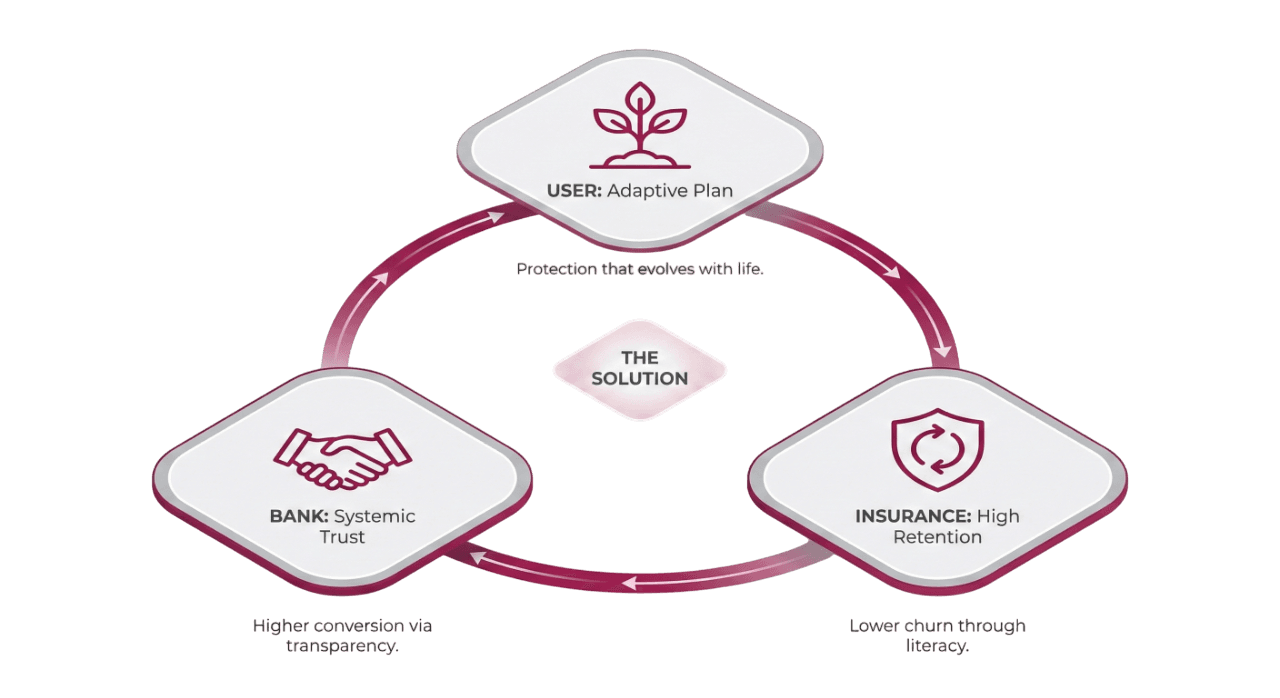
Audited the existing service architecture through 14 deep-dive stakeholder interviews, mapping the systemic friction across the User, the Bank, and the Insurer.
The Knowledge Gap
We uncovered a systemic 3-way miscommunication:
The Insurance Company sets aggressive sales targets for the bank.
The Bank Employee, often undertrained in complex term plans, pushes "one-size-fits-all" policies just to meet those targets.
The User, lacking product knowledge, blindly trusts a recommendation that might not actually fit their life goals.

Finding the Leak: The Broken Metric
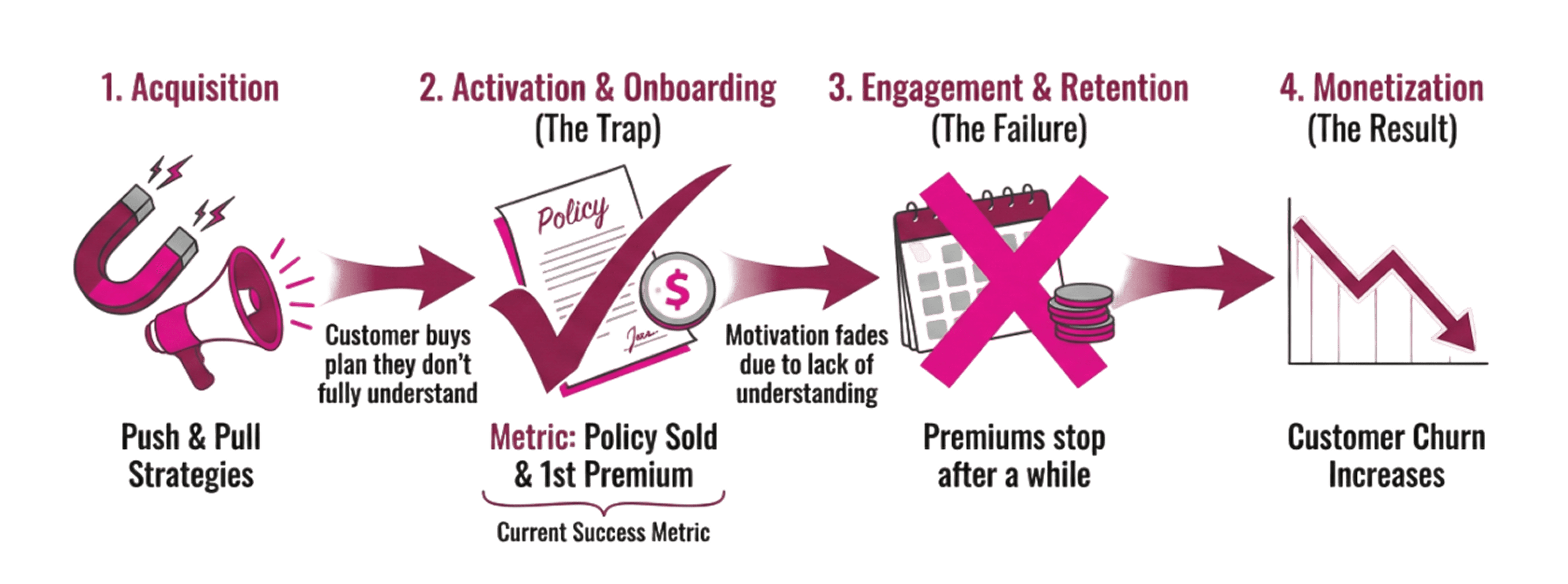
Our service teardown across the journey revealed a "Broken Activation Metric". The bank measures success solely by policies sold (Activation). However, because undertrained staff sell plans that users don't fully understand, the motivation to keep paying premiums quickly vanishes. It is a success in sales, but a total failure in Engagement and Retention.
The Problem Statement
The Strategy: The "Lego" Approach to Insurance
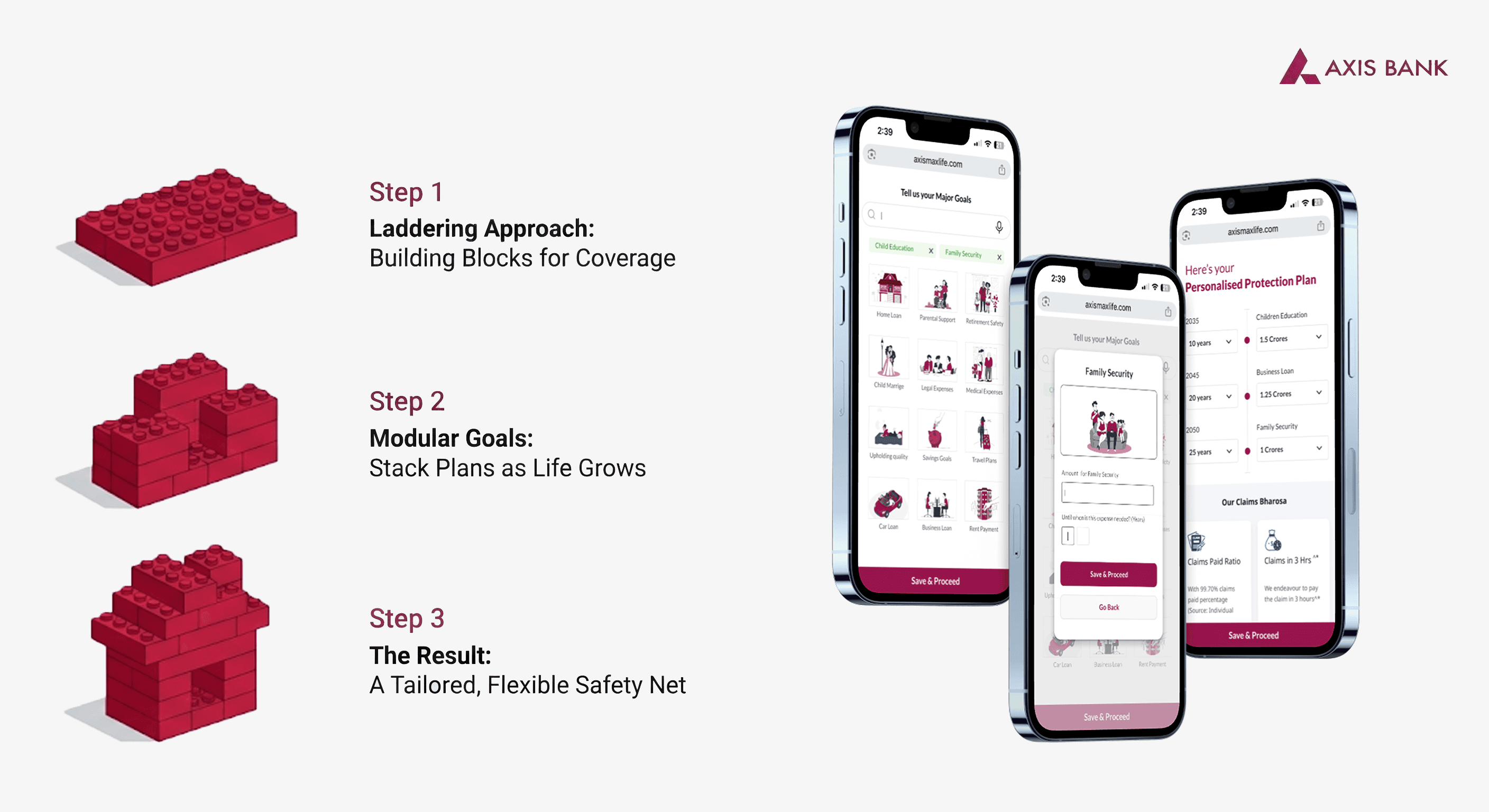
To solve this, we used Laddering. Think of it like Building Blocks. You don’t buy a massive, pre-built castle that you might not need. Instead, you start with a base and add specific blocks one for a home loan, one for a child’s education as your life grows.
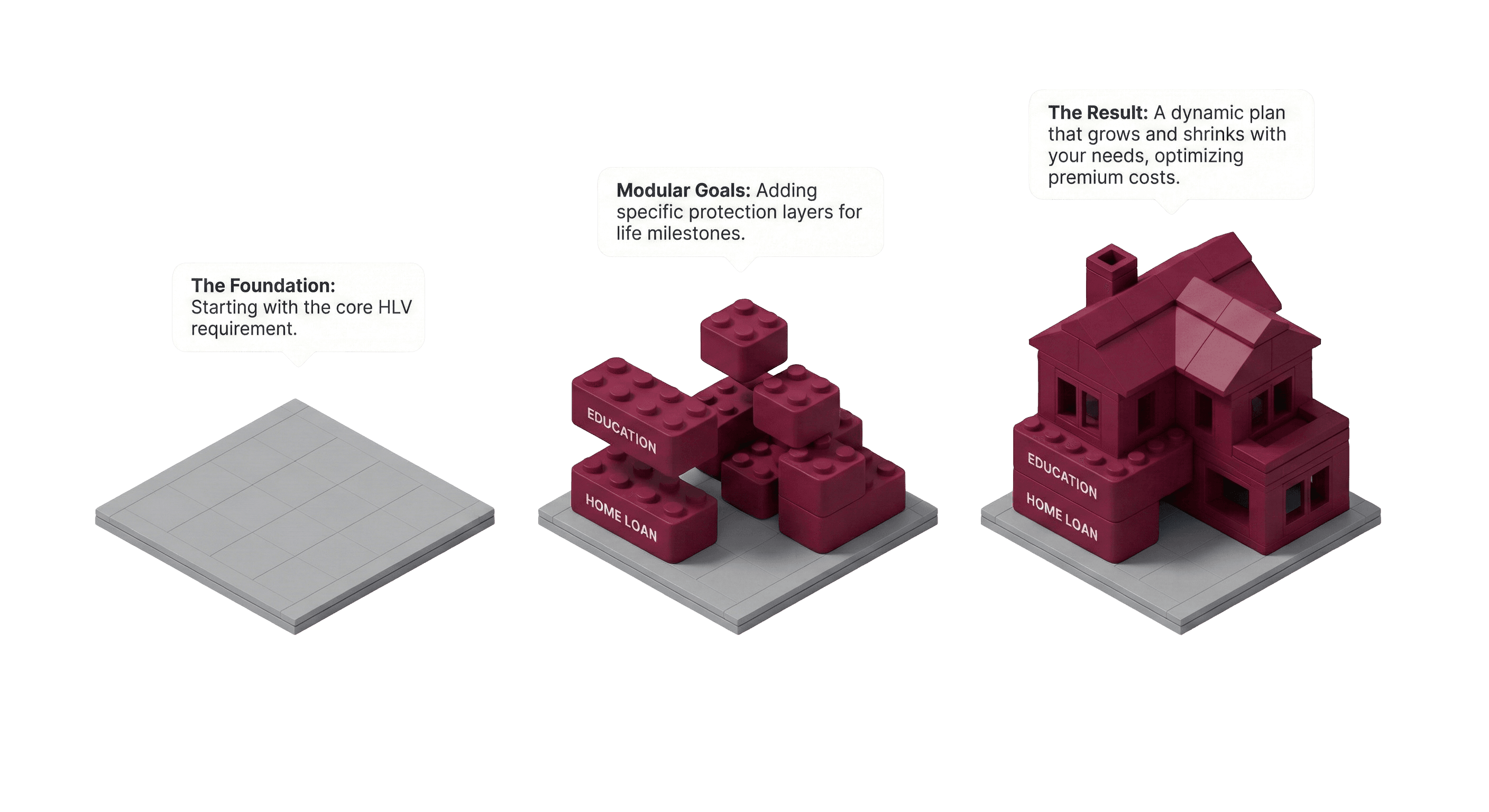
In insurance, Laddering allows users to stack smaller, goal-specific plans. As a loan is paid off, that specific "block" is removed, saving the user money while keeping them perfectly covered for their current life stage.
Onboarding & Commitment Hook
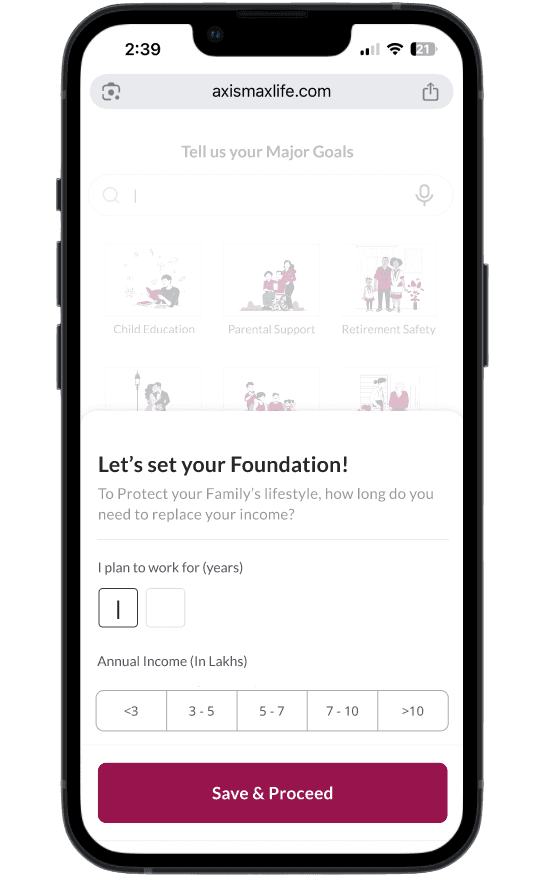
Strategic deferral of the "Annual income" question is intentionally removed of the 1st screen to delay this high friction question.
Simple, low friction questions first reduce user drop off and effort aversion by leveraging sunk cost fallacy and progressive disclosure strategy
The HLV Reframe
Shifts focus to future value, not current cost.
Income is asked for HLV calculation,
not to check eligibility. Helps solve the broken activation metric.
The Co-Creation Loop: Building Trust
Linking insurance to real-life goals makes an intangible product emotionally tangible.
"Add a goal" leverages endowment and Ikea effect to give users a sense of ownership of their plan increasing its worth in their eyes.
Goal gradient effect used with visual rungs to show users progress and motivate them to complete the task.
Ladder Visualization & Control Panel
A visual ladder chart reduces cognitive load and improves data clarity.
Users can adjust term data from drop down giving them a strong sense of perceived control by providing freedom of choice.
Smart constraints are applied where other data auto adjusts to the users changes to reduce decision fatigue.
The Receipt "Breakdown"
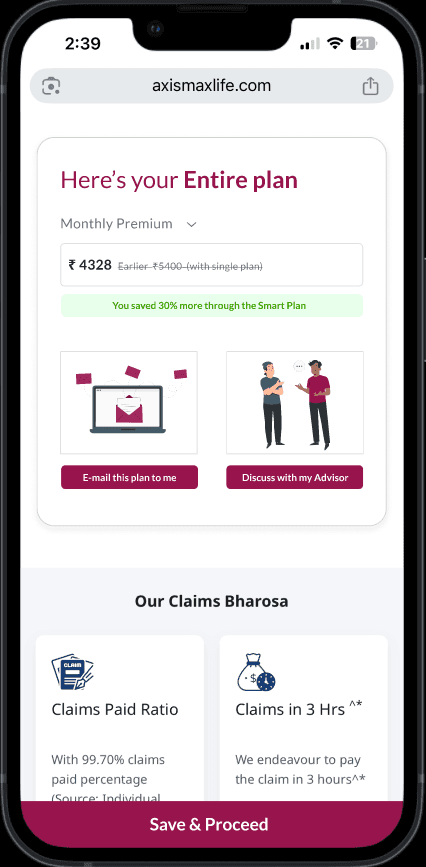
Transparency by breaking down what makes up the total premium, reducing the hidden cost fear.
Simple categorization of individual plans reduces cognitive load and improves clarity for the user.
Plan Summary & Confirmation
Green trigger to give user a sense of reward.
Low pressure actions like "email plan" and "discuss with advisor" to respect user hesitation and build trust.
My Key Learnings
Designing for systemic B2B2C friction requires looking past the UI. Here are the core takeaways:
Metric Integrity: High sales figures often mask deep service failures. True success is measured by long-term user trust and retention, not just the initial activation event.
Behavioral Leverage:Psychology is more vital than aesthetics. Applying mental models like the IKEA Effect and Goal Gradient creates genuine personal investment in a traditionally dry, high-friction domain.
Systemic Insight: True clarity requires researching the entire triad (User, Bank, and Insurer). This reveals deep-rooted systemic misalignments that user-only research would never uncover.
Want To Know More ?
Go Back